

A growing body of research shows that the heart and the gut are closely linked. What happens in the gastrointestinal tract can affect inflammation, metabolism, and the overall prognosis of patients with heart failure, which we usually associate with shortness of breath, edema, and rapid fatigue. It is this perspective that researchers from Wroclaw Medical University, authors of a 2025 review Gut microbiota’s role in heart failure published in Heart Failure Reviews, show.
Heart Failure and the Gut
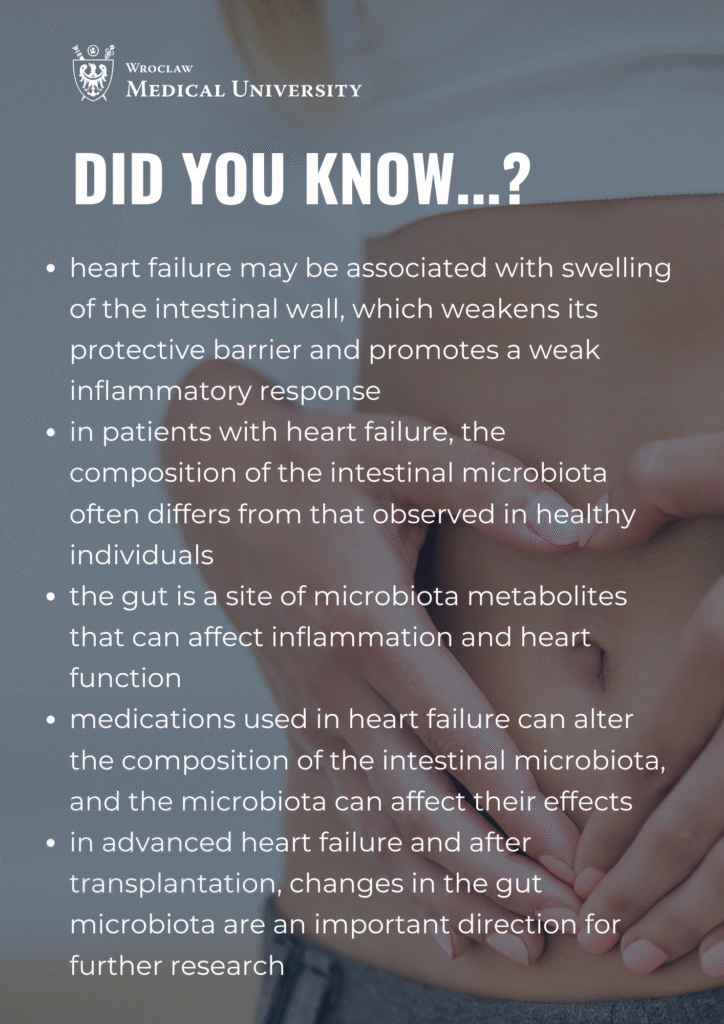
In heart failure, blood stagnates, and the swelling you see in the legs or lungs also appears in the intestinal wall, weakening the protective barrier. As a result, metabolites produced by intestinal bacteria more easily enter the bloodstream, promoting chronic, low-grade inflammation.
Patients with heart failure often have intestinal dysbiosis, which includes a decrease in the diversity of the microbiota and a loss of bacteria with anti-inflammatory effects, including microorganisms that produce short-chain fatty acids (SCFAs), notes study author Kamila Florek, MD from the Heart Institute.
Balance of the microbiota
At the same time, the authors emphasize that the available data differ significantly across populations, due to factors that shape the microbiota, such as genetics, diet, environment, or the treatments used. At this stage, therefore, it is not possible to identify a single, unambiguous profile of the microbiota specific to patients with heart failure.
The gut is the site of many chemical compounds that affect the entire body. Some of them can support the intestinal barrier and have a protective effect, while others, once in the blood, can increase the inflammatory response. The authors of the review highlight, among others, compounds such as short-chain fatty acids and TMAO (trimethylamine N-oxide), however, stressing that their effects are complex and dependent on many clinical factors.
Cardiac drugs and the gut
The relationship between the heart and the gut is not one-sided. Heart failure treatment can alter the gut microbiota, and the microbiota can affect drug metabolism and efficacy.
Drugs such as ACEIs/ARBs and β-blockers correlate with increased abundance of potentially beneficial butyrate-producing bacteria. Data on SGLT2 inhibitors come mainly from preclinical studies and suggest a shift in the microbiota toward a “more favorable” profile, but their clinical relevance in humans remains as yet unclear, – notes Matthew Sokolski, MD, co-author of the study.
A special group is patients with advanced heart failure, undergoing heart transplantation or mechanical circulatory support. In organ transplant patients, the gut microbiota influences the metabolism of immunosuppressive drugs such as tacrolimus and mycophenolate mofetil. Variability in microbiota composition can translate into differences in exposure to these drugs, increasing the risk of both toxicity and inadequate immunosuppression.
A second key area is the impact of the microbiota on immune function, including a potential link to the risk of graft rejection incidents. The role of gut microbiota metabolites in long-term prognosis also remains an important direction for further research.
Available, albeit limited, data suggest that elevated levels of TMAO (trimethylamine N-oxide), a product of intestinal bacterial metabolism, among others, may be associated with faster progression of lesions in the coronary vessels of the graft and an increased risk of acute cardiac rejection.
-We are currently conducting research in this area and plan to publish the first results of our observations soon,- Kamila Florek points out.
Practical application
The authors of the review are cautious in making recommendations. They emphasize that although the role of the gut microbiota in heart failure is increasingly well documented, for now, there is no basis for routine gut-targeted therapies in all patients.
Despite the growing interest in the role of the gut microbiota, individualizing interventions that target the microbiota in patients with heart failure remains a research concept at present. There is a lack of clear criteria to identify groups of patients who would benefit clinically from such interventions,- Matthew Sokolski, MD, concludes.
The development of optimal strategies and their implementation in daily clinical practice remain significant research challenges. Still, the first step is to understand the pathophysiological mechanisms linking the gut microbiota to the cardiovascular system.
This material is based on the article:
Gut microbiota’s role in heart failure
Kamila Florek, Katarzyna Komorowska, Jakub Ptak, Michał Jarocki, Joanna Gontarczyk, Roksana Mania, Anna Boluk, Ewa Żurawska-Płaksej, Łukasz Łaczmański, Mateusz Sokolski
Heart Failure Reviews