

At a time when reliable health knowledge is increasingly losing ground to simplifications, myths, and misinformation, initiatives grounded in science, institutional cooperation, and consistent education are gaining particular importance. One such initiative is the “Wrocław Gets Vaccinated” campaign, in which Wroclaw Medical University plays a key role. The university’s involvement in this project is an example of responsible academic engagement in public health and a tangible contribution to the health security of local communities.
The “Wrocław Gets Vaccinated” campaign is organized by the Department of Health and Social Affairs of the Wrocław City Hall, implemented by Wrocław Health Center SPZOZ, and funded by the Municipality of Wrocław. Its aim is to promote recommended vaccinations, including those against influenza, HPV, pneumococci, and other infectious diseases, while also raising health awareness among residents. The campaign is held under the honorary patronage of the Rector of Wroclaw Medical University, with scientific patronage provided by Professor Leszek Szenborn.
Education, Collaboration, and Local Communication
The university’s involvement goes far beyond image-building—it is primarily substantive. For over a decade, medical teams affiliated with the university have supported the municipal HPV vaccination program, and for the past two years have also actively contributed to the “Wrocław Gets Vaccinated” campaign. Experts from Wroclaw Medical University deliver lectures at training conferences for healthcare and education professionals and support educational activities conducted in schools. This long-term, expert presence is one of the pillars of the campaign’s effectiveness.
The campaign employs a wide range of communication and educational tools: animated videos, posters, competitions for vaccination providers, training conferences, school-based activities, outreach at public events, a dedicated website, and even the involvement of Wrocław’s iconic dwarfs as recognizable carriers of the message. This model combines health education with engaging, locally embedded communication, allowing it to effectively reach diverse audiences.
HPV at the Core of Preventive Efforts
A particularly important focus of the campaign is the prevention of HPV infections. These efforts build on the “Wrocław HPV Prevention Program” implemented between 2010 and 2023. Over 13 years, more than 27,000 girls and boys were vaccinated, achieving an average vaccination coverage of 72.3%. Following the introduction of the national HPV vaccination program, Wrocław and the surrounding district have maintained strong results—20,000 children vaccinated within 2.5 years, with coverage rates that stand out nationally.
These results are especially significant in the context of a global challenge: health misinformation. As highlighted in the report, HPV vaccination in Poland is still underutilized, partly due to low awareness of the link between HPV and cancer, as well as misconceptions about vaccine safety and effectiveness. Notably, knowledge gaps are also present among some healthcare professionals, underscoring the need for reliable educational efforts led by trusted academic and clinical institutions.
Responding to Misinformation and the Crisis of Trust
This is precisely why the “Wrocław Gets Vaccinated” campaign extends beyond local promotion—it represents a response to a broader crisis of trust and informational chaos, where health decisions are too often shaped by emotions, half-truths, and messages lacking scientific grounding. By engaging its experts, Wroclaw Medical University supports a model of communication based on evidence, responsibility, and partnership with local authorities.
This approach aligns closely with the university’s 2026 campaign “Healthier to Know,” aimed at combating health misinformation. “Wrocław Gets Vaccinated” fits seamlessly into this mission, demonstrating that effective health education must be scientifically sound, socially accessible, and consistently present in public discourse. It is at the intersection of medicine, education, and responsible communication that initiatives capable of truly changing public attitudes emerge.
From Local Initiative to International Recognition
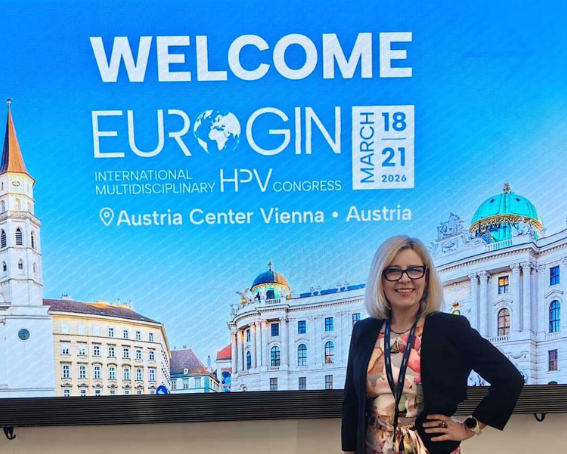
The international relevance of the campaign was highlighted in Vienna at the multidisciplinary EUROGIN congress, where “Wrocław Gets Vaccinated” was presented as an example of effective interventions increasing vaccination rates—even in countries with generally low coverage. The summary was presented by Dr. Kamila Ludwikowska, Vice-Dean for Development and Innovation at the Faculty of Medicine of Wroclaw Medical University and Deputy Head of the Department of Pediatrics and Infectious Diseases.
“The Wrocław campaign was based on audience-tailored interventions. We developed separate communication strategies for adolescents, teachers, parents, and vaccination staff,” said Dr. Ludwikowska.
A New Phase: E-learning Platform
According to the campaign’s authors, a key factor in its success has been annual motivational training for healthcare personnel and educational sessions for teachers.
“We are now taking a step further by moving these individualized interventions into the digital space through our proprietary CustomMed platform, which we plan to launch in April,” announced Dr. Ludwikowska. “As part of the continuation of the ‘Wrocław Gets Vaccinated’ campaign, we will implement microlearning for parents of adolescents.”
As emphasized by the expert, the platform’s content is based on insights gained from direct interactions in schools. It covers not only vaccination-related topics but also skills such as recognizing fake news, understanding the sources of conflicts around vaccination, and building media literacy—critical for navigating social media and verifying information sources.
The “Wrocław Gets Vaccinated” campaign demonstrates that a medical university can—and should—be an active participant in public health discourse. It not only educates future doctors, pharmacists, and public health professionals but also co-creates solutions to the most pressing challenges of our time. The Wrocław model of collaboration between local government, healthcare institutions, and academia proves that well-designed health education has the power to truly change reality.